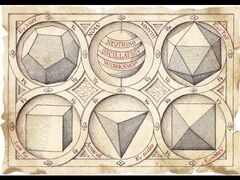
To recap and summarize, there are three different kinds of forms presented to us in the Parmenides, by Socrates:
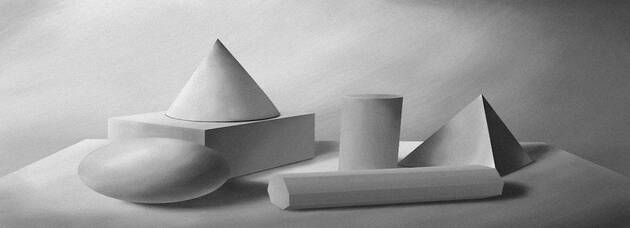
Relational: the subjective experience of qualities of things, relative to each other. For example, Bigness, Sameness, or Heaviness (and their oppositions: Smallness, Difference, or Lightness). Ontological: the model or exemplar of actual things. For example, Man, Animal, Fire, and Water (but, inexplicably, not things like sticks and stones and mud and sealing wax).
In this installment of the series on Plato’s Forms, we’ll have a brief look at the major conceptions of the theory, some of the key differences, and dig deep into the one formulation Plato seems to have favored the most. For those of you looking for a thorough discussion of Parmenides’ refutations, you’ll have to wait until the last installment. In keeping with the principle of the first post, the idea here is to just try to understand the theory itself, and the problem it was trying to solve, before we make any move to object to it.
It has become a commonplace habit in contemporary quasi-philosophical circles, to roll one’s eyes and snicker, or to sneer and sniff, whenever the mention of Plato’s Forms happens to sour the air. It seems to be taken for granted these days, that the Forms “just aren’t done” anymore, that somehow they’ve been shown to be disreputable or false, and that no one need any longer to take the idea seriously (least of all, professional philosophers).
I decided to spend three of my vacation days on the London School of Philosophy’s “Summer School” conference, this week. The theme of the conference was “Philosophy: Past, Present, and Future”, and the talks focused heavily on the broad questions like the nature of philosophy, it’s role and purpose in society, it’s place in history, its relationship to art and literature, and the implications drawn from consideration of these questions, for the future.
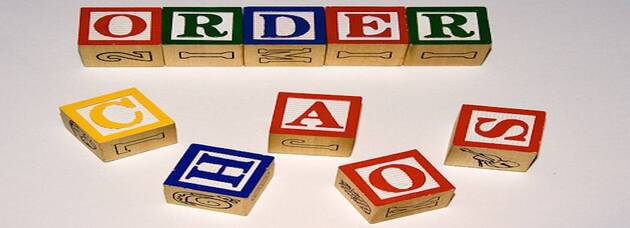
Socrates, in The Republic, argues that a society must be ordered, and that the just and ordered polity requires a just and well ordered soul. But, not all souls will achieve the rational ideal, says the anarchist. He has a point. However, this leaves both the advocate of a state and the political anarchist with a problem. An anarchy of disordered souls is pure chaos. A state of disordered souls is a tyranny.
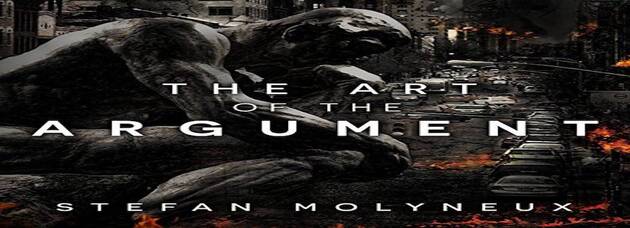
This weekend I had a little extra time on my hands, because of the bank holiday. It’s been quite a while since I’ve looked at any work by the growing cadre of freelance internet philosophers. So, I decided to have a look at the latest offering by Stefan Molyneux. Not a man to shy away from dramatic overstatement, the book is titled, The Art of The Argument: Civilization’s Last Stand.
I make known the end from the beginning, from ancient times, what is still to come. I say, ‘My purpose will stand, and I will do all that I please.’ ~Isaiah 46:10
In The Republic, Socrates repeatedly insists that truth will be the highest value of his utopian society. To accomplish this, he argues that the myths of Homer and Hesiod should be hewn down to only those stories that are in accordance with what we know to be true, by proper philosophic study and dialectic argumentation.
The following pseudo-dialogue is based on my reading of part three of Philippa Foot’s famous essay, “Virtues and Vices”, which can be found here. All of her “dialogue” constitutes direct quotes from the essay. In this essay, she seems to me to be anxious about identifying vice for what it is and has crafted a sophisticated means of diluting the boundaries between virtue and vice, in order to relieve that anxiety.
…after more than two thousand years the same discussions continue, philosophers are still ranged under the same contending banners, and neither thinkers nor mankind at large seem nearer to being unanimous on the subject, than when the youth Socrates listened to the old Protagoras, and asserted… the theory of utilitarianism against the popular morality of the so-called sophist… ~John Stuart Mill, Utilitarianism
I wonder, sometimes, if Mill had ever actually read the Protagoras.
Moral maxims are rules governing actions, or commands to act in certain ways considered morally correct. Some of the most well known maxims are those that come to us by way of religious tradition. “Thou Shalt Not Kill” and “Thou Shalt Not Bear False Witness” are paradigm examples. Kant insists that his Categorical Imperative is the best means by which to test the maxims, for whether they correctly guide us to right action and away from wrong action.