“If I must choose between peace and righteousness, I choose righteousness” ~Theodore Roosevelt
I have long held the belief that moral self-justification is both the engine and the doom of the world. Nobody does what they do thinking to themselves “this is the wrong thing, so I should do it”, or desiring to do wrong for its own sake. Even people as evil as Hitler, Stalin, and Pol Pot all had reasons for why they did what they did.
I discovered Steve Patterson by way of my YouTube recommendations some time in the late summer or fall of 2016. I’ve not yet listened to all of his back catalogue, but I have listened to a number of his great interviews and interview “breakdowns”. He recently self-published a short book called “Square One: The Foundations of Knowledge”, via Amazon’s CreateSpace. I love epistemology and logic, and I’m keenly interested in the growing phenomenon of “internet philosophers” (many of whom proudly proclaim themselves emancipated from academia).
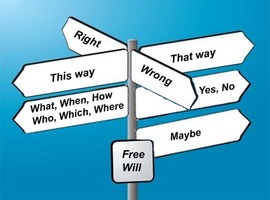
Expound and assess Schopenhauer’s argument that free will is an illusion. Does he succeed in showing what he calls “relative” freedom is not really enough to constitute free will?
Schopenhauer does succeed in logically arguing that what he calls “will” is not “free”, as he conceives the terms “will” and “free”. However, he does not succeed in showing that what we commonly understand to be freedom, is in any way undermined by his conception of the will.
The IEP defines Qualia as:
“…the subjective or qualitative properties of experiences. What it feels like, experientially, to see a red rose is different from what it feels like to see a yellow rose. Likewise for hearing a musical note played by a piano and hearing the same musical note played by a tuba… As [C. I.] Lewis [the originator of the term] used the term, qualia were properties of sense-data themselves.
In what way, if any, is Feagin’s solution to the Paradox of Tragedy an improvement on Hume’s solution?
Introduction Susan Feagin’s solution to the Paradox of Tragedy is not only not an improvement to Hume’s solution, it is not a solution at all. I will argue that Feagin fails to improve upon Hume’s solution for two key reasons. First, because her solution suffers from the same inscrutability as Hume’s solution.
EDITORS NOTE: I wrote this at a time when I was not yet equipped to do such a thing as analyze Rousseau. This now reads more to me like a YouTube reaction video, than a proper analysis. A much improved analysis will be forthcoming in 2022. ~ Greg. 1 Dec. 2021 “Man is born free; and everywhere he is in chains.”
This famous opening line of Jean-Jacques Rousseau’s equally famous essay, appears, to our modern minds, to point clearly toward an obvious question: ‘Why?
The proposition ‘I am, I exist’ (ego sum, ego existo – hereafter, referred to as the ’ego’), is of special importance in the argument of Descartes’ Second Meditation for many reasons. More generally, it is important because of the implications it has for Descartes’ overall philosophical project. For example, it implicitly rejects religious authority in favor of a personal standard of knowledge in an era in which Galileo faced aggressive persecution; it also forms the nascent beginning of the still ongoing nature-nurture debate, and it ultimately makes Descartes something of an Augustinian.
Aristotle’s argument in Physics II 8 can be summarized as follows:
Dogs typically develop teeth good for biting and chewing. A typical result is not a coincidence. So it’s not a coincidence that dogs develop teeth good for biting and chewing. If the development is not coincidental, it must be “for something”. So the dog’s development is “for something”. (that is, it is goal-directed) The problem with this argument lies in premise 4.
“What is truth?” ~ Pontius Pilate
This is an interesting and surprisingly difficult question. If you look in the OED, what you’ll find there are entirely circular and self-referential explanations: “the quality or state of being true“, ” that which is true or in accordance with fact or reality“, and “a fact or belief that is accepted as true“.
So, the poor souls that rely on the dictionary are left with, essentially, “truth is what’s true”, and “what’s true is what we agree are the facts of reality.
The following quote is from a discussion of Plato’s dialogue “The Republic”, from this course on Coursera. The professor, a Dr. Meyer, is explaining the interactions early in the book between Glaucon, Adeimantus, Socrates, and Thrasymachus, wherein the group is debating the subject of whether it is more advantageous to be a just or an unjust man. Dr. Meyer, in this quote, is attempting to compare the vulgar egoism of Thrasymachus to Ayn Rand’s Virtue Of Selfishness, in a throw-away line clearly intended to virtue-signal, and intimidate younger students: