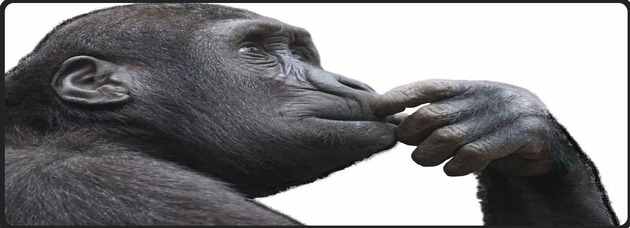
The Epistemic Regress (specifically, the Skeptical variety) is a little out of my depth at the moment, but what is plainly obvious by various presentations of the problem, is that at it’s core lies the Problem of Knowledge. The key question that arises in the examination of major premises in any deductive argument, is “how do you know?” This suggests that something essential about the nature of the premises needs to be discovered, before we are going to solve the riddle.
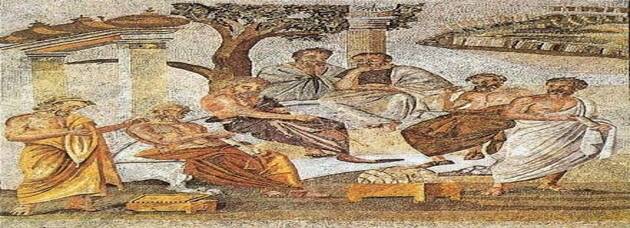
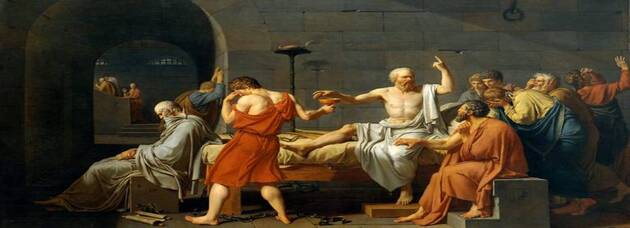
Introduction I’ve decided to take on the challenge of re-writing the Euthyphro dialogue, from this Coursera class, to explore alternative dialectical paths around the dilemma. When I first made this decision, I knew intuitively that if I took it seriously it would actually be a more challenging assignment than simply explicating Plato’s theory of the just soul from The Republic.
Plato’s dialogues are not just sets of step-by-step logical walk-throughs, within which you can simply change premises to arrive at new conclusions.
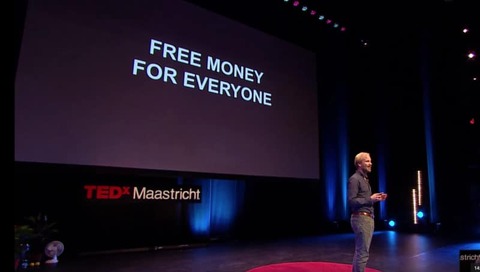
Free Money For Everyone Over the last year or so, I’ve seen a number of fresh videos popping up in places like TED, enthusiastically championing a resuscitated old leftist public policy idea called the “Universal / Unconditional Basic Income”, or “UBI”. This summer, Switzerland is scheduled to hold a referendum on one such proposal. And, earlier this month, I attended a lecture here in London, in which Barb Jacobson made a vigorous pitch for the idea.
”When a man’s knowledge is not in order, the more of it he has, the greater will be his confusion” Herbert Spencer
Today, I attended a lecture by Derek Bates hosted by the Conway Hall Ethical Society, in London. I call it a lecture perhaps too generously. You’ll see why in a moment. The event was billed as one man’s attempt to provide a reasoned defense for the efficacy of a more direct democracy, and to propose a technological solution to the logistical problems inherent within it:
Last night, I watched a debate between a journalist, a sociologist, and a scientist over whether or not philosophy is “dead” (as Stephen Hawking put it). Lewis Wolpert completely wiped the floor with the non-philosophers pitted against him. And sadly, he was also mostly correct. Philosophy has not done itself proud of late, and the fact that this panel didn’t actually include any philosophers to stand in its defense, is evidence that it is struggling, if not dead.
A short free-flow poem I wrote a long, long time ago:
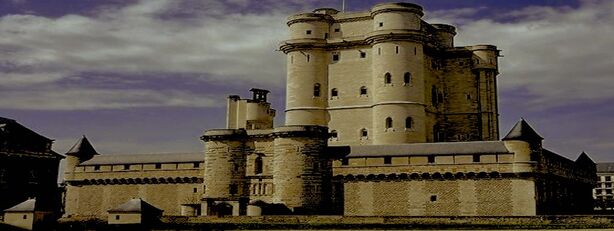
Words beg their commission from a hidden king, whose graces they resent. Emissaries, soldiers, courtiers, troubadours, and priests, they are sent forth from his castle to bid the world take heed of him. For without their tireless march, the master would suffer alone in his windowless tower, dark, brooding, and voiceless. But without his strength, those flickering lights of mirrored meaning would themselves go dark.
My first visit to London, was during a holiday trip in 2007. Here’s how I memorialized it
The ancient matron grasps longingly for the sky, a crowd of bony fingers stretching upward, black threads tied to each one, laden with dangling bits of civilization renewed. Below, in her bowels, a gritty brown aroma, and clattering, grumbling, tin boxes scatter frantically along well-worn paths, long sullen with a heavy memory of countless other footfalls.
[BRADLEY] “Jerry?“
[JERRY] ”Yeah, Bradley?“
[BRADLEY] ”Where are we?“
[JERRY] ”I ain’t quite sure, but I can smell that fruit gettin’ close, and I ain’t stoppin’ till I find it!“
[BRADLEY] ”Shouldn’t we be getting back to the pad?“
[JERRY] ”Goddammit, Bradley! You wanna be eatin’ mold your whole damned life?“
[BRADLEY] ”But I can’t see a thing, Jerry. I’m scared!“
[JERRY] ”Well, me neither, but Jes’ stay close, and you’ll be fine!
Look at yourself in the mirror this morning. See the lines of failure drawn out from the points of your eyes. Remember that face before they were there. Ask yourself what you were doing before those were there. Consider, for a moment, what you could be doing today, instead of what you have to do.
Think of something encouraging to shake off the melancholy. Chuckle at the silliness of this ritual of self-pity, turn toward the shower, and step in.