The following are things that are presently being informally labelled “religions” by various commentators:
Environmentalism (Michael Shellenberger, “Apocalypse Never” ) Feminism (Janice Fiamengo, “Daughters of Feminism” ) Woke Ideology (James Lindsey, “New Discourses” ) Anti-Racism (John McWhorter, “Talking Back, Talking Black” ) There are probably others, but these are the ones I am aware of. Each of these has component features analogous to features of established religions, it is true. Here is an incomplete list that comes to mind:
Martin Luther King, Jr. was the last black leader to point Americans to the divine inspiration in the Declaration of Independence, and to make us face our own hypocrisy honestly. We shot him dead for it. In his place, we substituted Lyndon Johnson, who sold us a false absolution from white guilt through condescending paternalism that maintained the status quo by making it look like charity and radical liberation.
In this sense, the complaints about ongoing systemic racism are true.
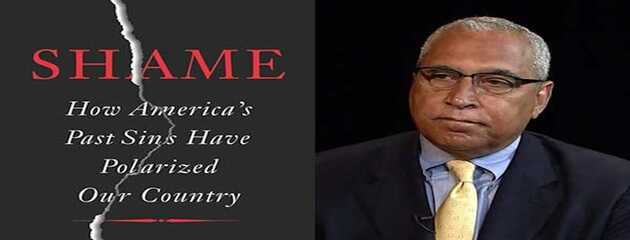
Shelby Steele, Shame: How America's Past Sins Have Polarized Our Country [The modern left] and I come from two very different Americas. The shorthand for these two Americas might be “liberal” and “conservative,” but this would indeed be a shorthand. These labels once signified something much less incendiary than they do today; they were opposing political orientations, but they shared a common national identity. One was conservative or liberal but within a fairly non-contentious cultural understanding of what it meant to be American.
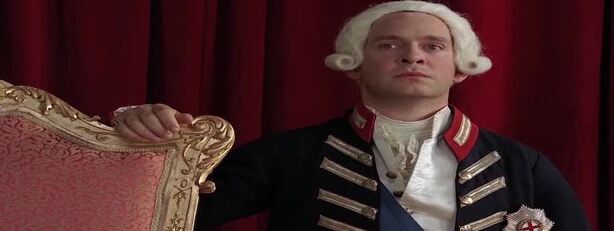
Are you a Dickinson or an Adams? Today, we all think we’d be on Adams’ side of the debate. However, given the relationship between the colonies and the British crown, and the people who populated the Continental Congress, I don’t think the choice is really all that clear-cut.
Imagine it this way: you live in a small territory recently purchased and controlled by the United States. You moved there from your home state where you’d lived most of your life, in order to set up a US outpost, and make a new life for yourself.
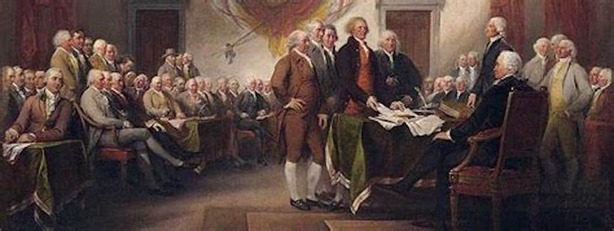
The Declaration of Independence, one paragraph at a time. Conclusion: Our Sacred Honour
We, therefore, the representatives of the United States of America, in General Congress assembled, appealing to the Supreme Judge of the world for the rectitude of our intentions, do, in the name, and by authority of the good people of these colonies, solemnly publish and declare, that these United Colonies are, and of right ought to be free and independent states; that they are absolved from all allegiance to the British Crown, and that all political connection between them and the state of Great Britain is and ought to be totally dissolved; and that, as free and independent states, they have full power to levy war, conclude peace, contract alliances, establish commerce, and to do all other acts and things which independent states may of right do.
Prudence, indeed, will dictate that governments long established should not be changed for light and transient causes; and, accordingly, all experience has shown, that mankind are more disposed to suffer, while evils are sufferable, than to right themselves by abolishing the forms to which they are accustomed.
But, when a long train of abuses and usurpations, pursuing invariably the same object, evinces a design to reduce them under absolute despotism, it is their right, it is their duty, to throw off such government, and to provide new guards for their future security.
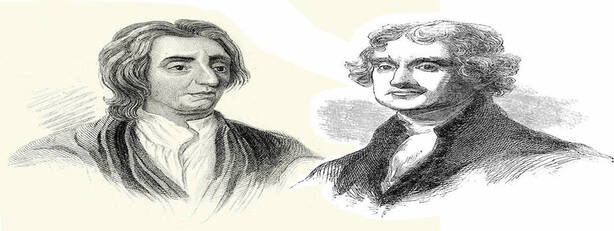
We hold these truths to be self-evident, that all men are created equal, that they are endowed by their Creator with certain unalienable rights, that among these are life, liberty, and the pursuit of happiness. That, to secure these rights, governments are instituted among men, deriving their just powers from the consent of the governed. That, whenever any form of government becomes destructive of these ends, it is the right of the people to alter or to abolish it, and to institute new government, laying its foundation on such principles, and organizing its powers in such form, as to them shall seem most likely to effect their safety and happiness.
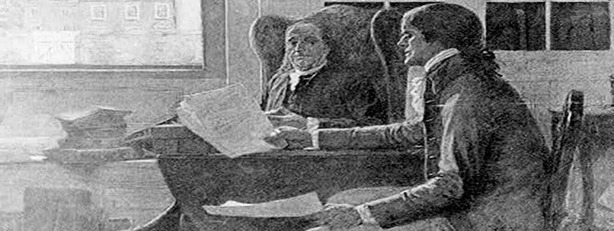
When, in the course of human events, it becomes necessary for one people to dissolve the political bands which have connected them with another, and to assume, among the powers of the earth, the separate and equal station to which the laws of nature and of nature’s God entitle them, a decent respect to the opinions of mankind requires that they should declare the causes which impel them to the separation.
In academic circles right now, it is very trendy to study and write on the philosophical thought of ancient tribal Africans and near-easterners. Keen attention is paid to thinkers who “got their first” - which is to say, if you can find an African thinker that stumbled upon the cosmological arguments of Aquinas or Anselm chronologically before Aquinas and Anselm thought of them, or an Indian thinker who discovered the is-ought dichotomy chronologically before Hume, you’ll be an instant academic hero.
In the early 90’s, I attended a performance of the Mikado put on by the college troupe my younger brother was involved in. There was one member of the cast who’d taken it upon himself to refuse to act when on stage. He would appear, shuffle to the places he was supposed to stand, and then shuffle off, when the scene required it.
I asked my brother what that guy’s deal was, and he said they couldn’t remove him because of the threat of a complaint against the school, and that he was “protesting” the caricature portrayal of asians in the musical, by refusing to act.