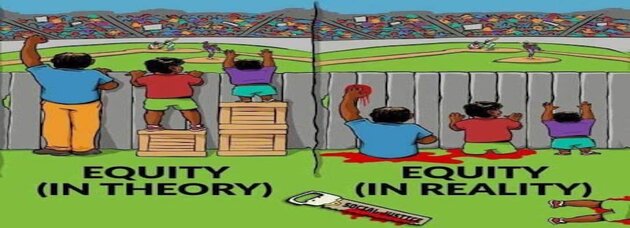
I want to make a bold claim: I don’t think there is any such thing as ‘equality’.
Now, just to clarify: clearly, arithmetic and geometric equality is real. Otherwise the “ = “ wouldn’t exist. What I am referring to, is the sense of the term that gets applied to human social and political relations. This kind of equality is a phantasm; a will-o-wisp; a unicorn, in all its varieties. If we look at particular examples of what people tend to call “equality”, what we find are hidden changes in the meaning of “equal”.
Aristotle’s understanding of the soul is derived from his theory of substance in The Metaphysics. By way of the hylomorphic combination of body-as-matter and soul-as-form, a unique individual is generated and equipped with the capacity to act in ways that living things act. Is this theory a “middle way” between the view of living things as purely material (where life is a sort of emergent property, dependent on matter), and dualism (the view that the body is is a dependent “container” of a Platonic Form)?
In the first book of the Politics, Aristotle argues for the view that man is a ‘political animal’. To assess the claim properly, we must first understand what he means by the term, and we should understand the reasoning he uses to defend it. Thus examined, we will find his position interesting, but ultimately unsatisfactory. However, it may be possible to shore up his case.
Aristotle’s ‘political animal’ (zoon politikon) is not the creature we might expect today – a conventional construct enfranchised by legal edict and duty-bound only to his own individual happiness as a free agent in a democratic nation-state.
In On Interpretation, Aristotle presents the thought experiment of the sea battle in order to grapple with a logical paradox stemming from his commitment to correspondence in truth and the Law of Excluded Middle on the one hand, and his commitment to potentiality in the future, on the other. Given these commitments, if we are to say that there will be a sea battle tomorrow, then two questions (at least) need to be considered.
Everyone who studies undergraduate political philosophy already knows what Locke has to say in his Second Treatise on Government.
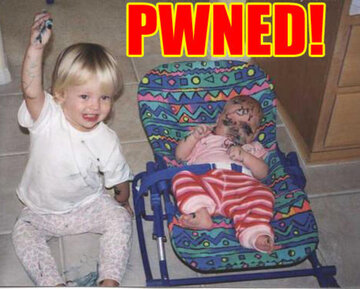
But in this age of “reaction” videos, roasts, and “pwnage”, I think the polemics in Locke’s FIRST treatise are way more entertaining! It is, hands down, the longest objection screed I’ve read of the Enlightenment thinkers, apart from the responses to Descartes’ Meditations.
The opening paragraphs had me in stitches:
"…truly, I should have taken sir Robert Filmer’s Patriarcha, as any other treatise, which would persuade all men that they are slaves, and ought to be so, for such another exercise of wit as was his who writ the encomium of Nero; rather than for a serious discourse, meant in earnest: had not the gravity of the title and epistle, the picture in the front of the book, and the applause that followed it, required me to believe that the author and publisher were both in earnest.
People tend to romanticize the inspiration of the artist, or the insight of the philosopher. It is often depicted as a kind of tsunami of creative passion, that washes over the mind and consumes the person. Archimedes in the bath, or Mozart on his deathbed (I hate you, Milos Forman) come to mind as examples. But this is pure fantasy, as far as I can tell.
Instead, ideas are like drops of water falling from the sky, on an arid summer day.
What is exploitation?
Marxists make a great deal of hay out of the term. What are they talking about?
The dictionary offers a definition that perhaps accidentally includes a subtle but profound distinction. Exploitation is either (a) “to make full use of” or “derive benefit from”, or (b) “to use unjustly”, or “to derive unfair benefit from”.
So, on the one hand, we have a neutral term that might even be seen as a positive, in some respects.
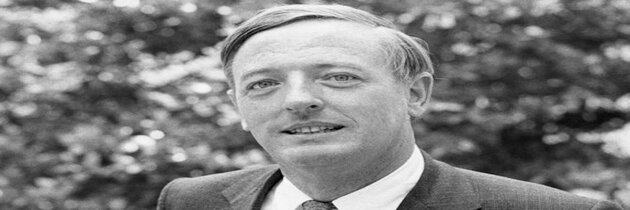
From: “Up From Liberalism” (1959), William F. Buckley, Jr.
There is no conservative political manifesto which, as we make our faltering way, we can consult, confident that it will point a sure finger in the direction of the good society. Indeed, sometimes the conservative needle appears to be jumping about as on a disoriented compass…
…Still, for all the confusion and contradiction, I venture to say it is possible to talk about “the conservative position” and mean something by it.
As far as I can tell, when it comes to mind, there are four possibilities:
Mind is an illusion. It doesn’t exist at all. We only think we’re experiencing ourselves consciously, because the particular arrangement of matter and energy that constitutes what we call the human mind, is constituted in such a way as to cause confusion between mere matter and energy and something else we call mind.
Mind is an epiphenomenal or emergent property of certain arrangements of matter and energy.
In a Psychology Today interview posted today, Stevan Harnad has this to say, in response to criticisms over his equating The Holocaust with animal slaughter. I’m going to set aside his All Capital Letters Defense Of His “Eternal Treblinka”, and instead, focus on his argument defending “sentience”, which as we’ll see, is only barely an argument:
…The Holocaust is Humanity’s Greatest Crime Against Humanity. But the Eternal Treblinka we inflict on animals is Humanity’s Greatest Crime.