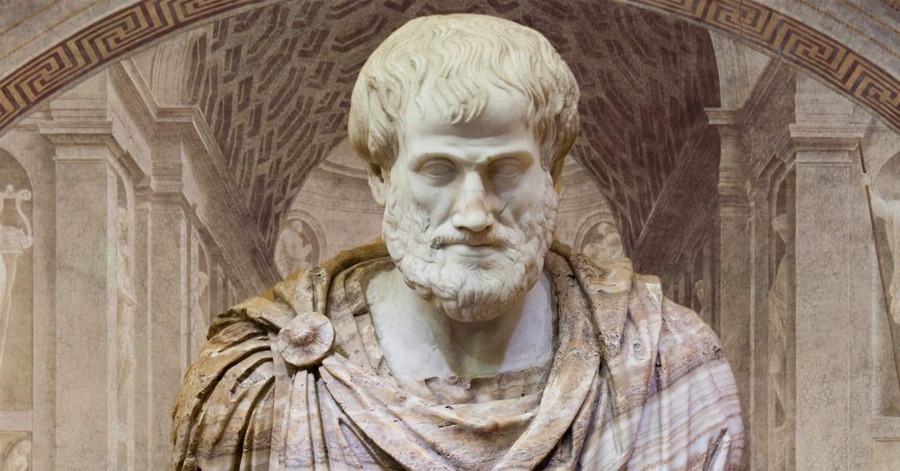
The Categories is Aristotle’s first attempt to outline a theory of being, in addition to the work’s central focus, which is to provide an account of the ways in which we think about being, and beings. In total, there are ten categories of thought about being, but the core of his theory of being begins with the first category. This is what he called “substance”. This essay will summarise Aristotle’s conception of substance as he presents it in The Categories, briefly explain what distinguishes substance from the other categories, and offer some additional thoughts about the metaphysics of being, in relation to Aristotle’s mentor, Plato.
I think there is a lack of subtlety in the modern debate around meaning and truth. People struggle with ham-fisted dichotomies and adversarial arguments that never go anywhere, because of this low resolution notion of meaning. I want to suggest that we think of meaning in three different ways, and that each of them has a context and a scope that is appropriate to that distinction.
VALENCE Valence is the truth value of a proposition.
Why does causality work? (OR: What is change?) Modern physics offers a powerfully sophisticated description of the behaviour of matter, including extremely complex maths that gives us highly reliable predictive power.
But, when you peel back the layers of that onion, what you find are wispy metaphors and “placeholder” terms at the core. The most popular, of course, are the terms “energy” and “force”. But, what is that? The common example of billiard balls provides a good illustration.
It seems to me, that the problem of desire has three plausible attitudinal responses:
The hedonic approach: there is a never-ending supply of desirable things, and life is best lived by pursuing them all. Want is sated when all desirable things have been had. The goal, then, is pleasure at all times, as an equivalent to happiness.
The ascetic / Buddhist approach: the things to be desired are never-ending, which means there will never be a time when all desirable things are had.
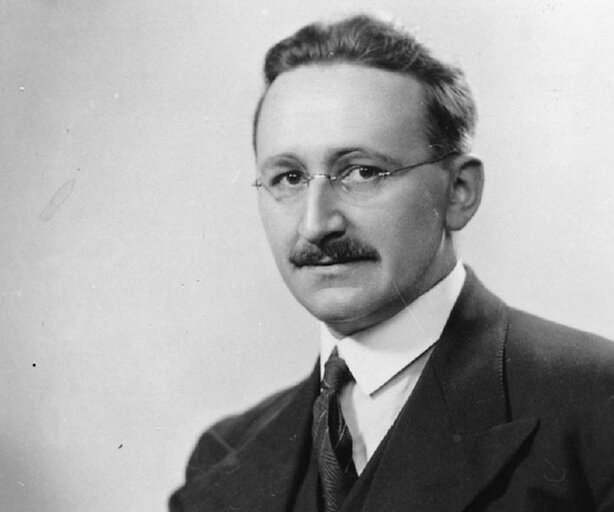
Did you know that Friedrich Hayek wrote extensively on the topic of Social Justice and Progressivism? One of the best places to look for his wisdom on the topic is “Law, Legislation, and Liberty”. He devotes an entire chapter to the subject, there. Here is an extended snippet from that chapter:
It is perhaps not surprising that men should have applied to the joint effects of the actions of many people, even where these were never foreseen or intended, the conception of justice which they had developed with respect to the conduct of individuals towards each other.
In the Physics, Aristotle says that we aim at understanding, which he says is to be able to give a full account of “the how and the why of things coming into existence and going out of it”. In other words, to understand something is to be able to give an explanation of how and why a thing changes. That explanation is what Aristotle means by ‘cause’. Today, thinking of explanation in terms of causes is not an alien notion.
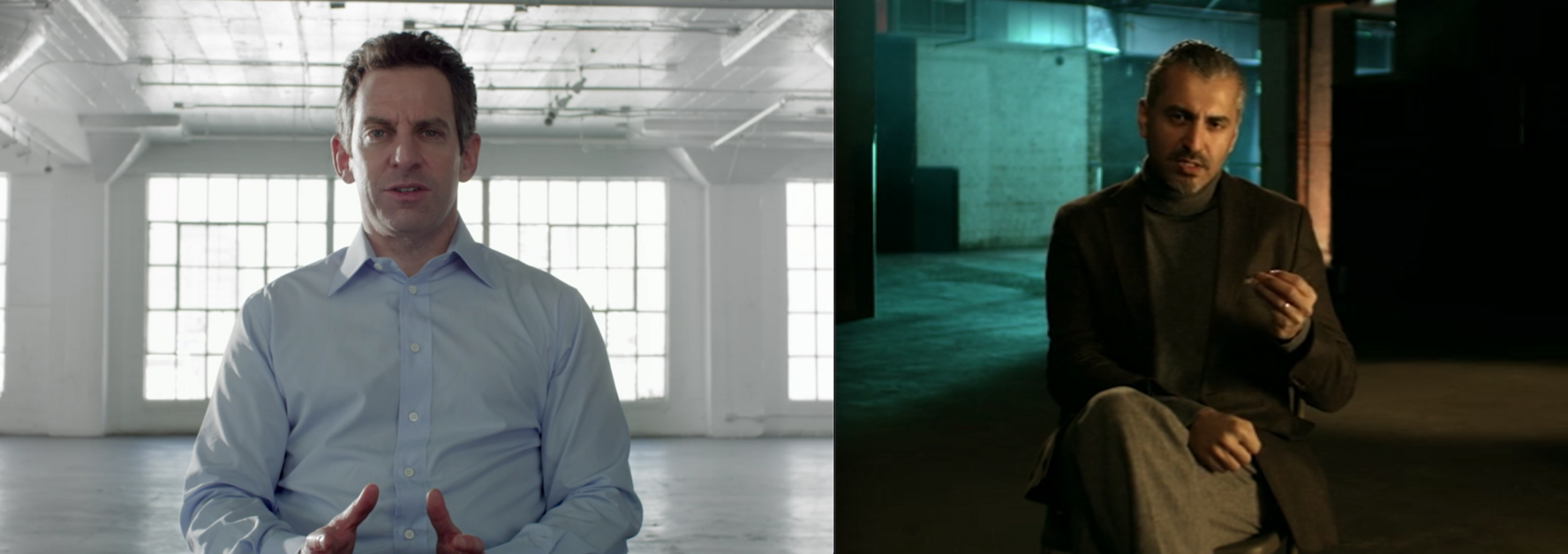
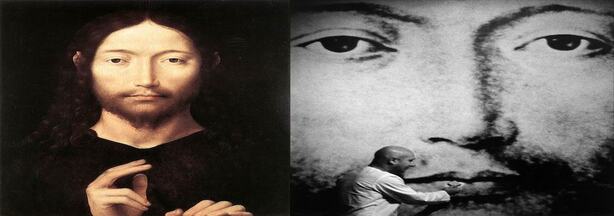
I am 36 minutes into the documentary “Islam and the Future of Tolerance”, and I could not help but notice the contrast in the way that Sam and Majid are visually presented. I am not a filmmaker, but it seems clear to me that there is visual framing of a dichotomous narrative going on here.
Light/Dark, Good/Evil, Angel/Demon. On the left, Sam is not talking about his own experience in that scene.
This post is my first foray into the question of whether or not there is a God. Before I can begin to attempt an answer, I need to explore a deeper question. Namely, what is the nature of this question? What exactly are we asking, when we ask this question? I want to suggest that this question is best understood as a fundamental choice, and that the choice is not simply one of satisfying an ontological preference, but one of universal significance.
Last night, I re-viewed George Lucas’ “THX-1138” (for the 20th time), and paired it with Phillip Noyce’s 2014 film treatment of “The Giver”.
Both films portray differing versions of what I like to call the “escape trope” in science fiction dystopias: the main character’s whole motivation is to leave his society. In the first, THX is rejected by the dead society within which he is trapped in an unremarkable role, as soon as he is discovered to be non-compliant.
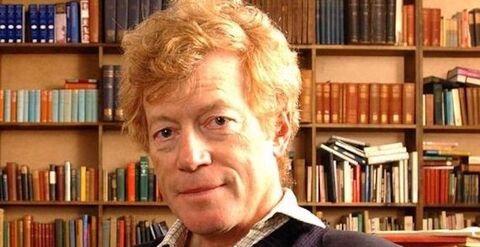
It’s a tragedy that his death is being ignored by everyone. His voice was an essential one, in today’s culture. I do not think there is anyone sufficient to replace him. Peter Hitchens, as erudite as he is, is a pale imitation. Scruton was the last of the “somewhere” people.
I first discovered Roger Scruton with the release of the book “Thinkers of the New Left” (1985) – recently re-released as “Fools, Frauds, and Firebrands” – a book I discovered in the mid-nineties after reading Allan Bloom’s “Closing of the American Mind”.