In his book, “Anarchy, State, and Utopia”, Robert Nozick offers the Wilt Chamberlain thought experiment in order to demonstrate how a conception of justice based on “end-state patterned distributions” (as he put it) would require constant coercive interventions on the part of the state, in order to maintain the desired pattern. This, in turn, would undermine theories of justice that incorporated liberty into their framework. John Rawls’ theory of justice is one such example.
One frequent appeal by determinists in the free will debate, involves invoking certain facts about neuroscience to deny efficacy to the conscious subject. In order to do this, one of the things the determinist must say, is that sense impulses are somehow processed unconsciously into a coherent whole, before they are presented to the ‘conscious’ subject as an ’experience’, and that this processing (along with pre-conscious processing of decision-making activity), shows that we are entirely causally determined.
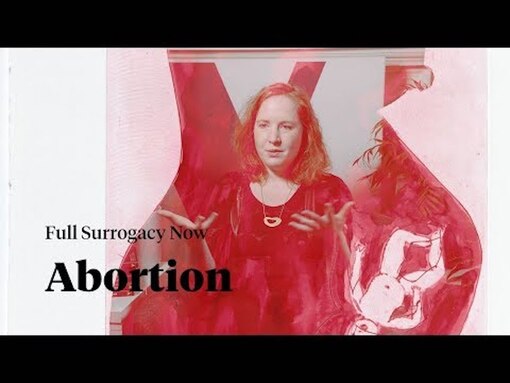
According to Sophie Lewis (in Full Surrogacy Now) , if you are a woman, you are a vulnerable victim who at any moment, can be pressed into slave labor as a “gestational worker”, subject to horrors as evil as cancer, and as brutal as an animal attack:
“…It is a wonder we let fetuses inside us. Unlike almost all other animals, hundreds of thousands of humans die because of their pregnancies every year, making a mockery of UN millennium goals to stop the carnage…….
Sam Harris, in his latest podcast, gives his listeners a special treat late in the episode. He hounds Richard Dawkins into submitting to a mindfulness meditation, and we get to spend nearly 15 minutes listening to Harris guide us and his guest through it, while waiting for Dawkins to finally ask Harris “what was the point of that?”.
What is remarkable about this whole segment, is the sales pitch that Harris has to offer Dawkins, in order to cow him into doing it.
In any given exchange market (whether free or otherwise), goods and services are traded as a matter of course, in the pursuit of both individual and social goals. Those trades will result in substantive outcomes both for the individuals involved in trades, and more broadly for society as a whole. It has been suggested that some of those outcomes may be undeserved. If we assume this to be the case, the question then arises, are undeserved market outcomes are unjust?
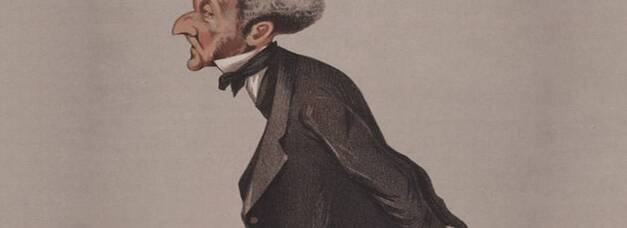
J.S. Mill’s famous essay On Liberty proposes a broadly Utilitarian principle to be applied for the purpose of the preservation of individual liberty against state coercion. This principle is known as the ‘harm principle’. Mill provides three vaguely distinct formulations of the principle, and in each one, the term ‘harm’ takes on a slightly different meaning. The first formulation implies a definition of harm as an act which would require either individual or collective ‘self-protection’ as a response.
Dirty little secret about logic: If induction has a justification problem (and it does), then so does deduction. Why? Because deductions rely on inductive conclusions imported into their premises. Here are a few examples.
A. Aristotelian Syllogism:
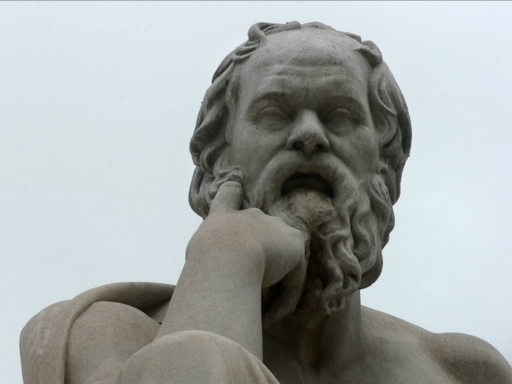
All men are mortal Socrates is a man C: Socrates is mortal Look at premise 1. What gives us the right to say that this is a true premise? Well, because we cast our gaze over a range of humans, and we see that they have all grown old and died.
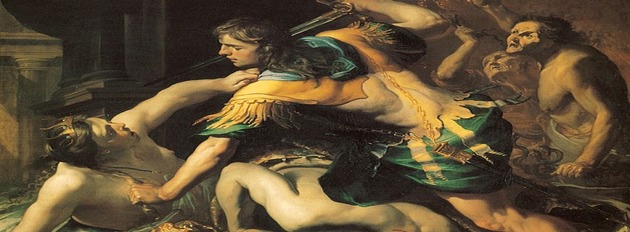
In Aeschylus’ play Oresteia, Agamemnon sacrifices his daughter as an offering to the primitive (pre-classical) gods of nature and war, meant to insure sea passage and victory in an upcoming battle.
In doing so, he sets in motion a cascade of blood vengeance that echoes the historical practice of pre-classical Greek retaliatory clan justice. On Agamemnon’s return home, Clytemnestra cuts his throat in his bath. On the discovery of this horror, Orestes then, on prompting from his sister Elektra, murders his mother Clytemnestra.
A question is posed to me via my coursework: “Does justice require that anything be distributed equally? If so, what?” This is, of course, the bog-standard prompt for the student to explain the modern dispute between John Rawls1 and Robert Nozick2 . We’ll get there shortly, but first I want to back up and ask the more fundamental (indeed, perennial) question: What is justice? At the risk of plagiarizing Socrates, I might clarify that I am not asking, “what makes a just circumstance just“, or “show me a particular instance of a just set of arrangements“.
A core problem in political philosophy is the relation between the individual and the society in which he is a member. How does the political order, in the form of the state, legitimize itself and how are its impositions upon the individual, in apparent opposition to his freedom, justified? Jean-Jacques Rousseau attempted to solve this problem in his famous essay The Social Contract. To quote Rousseau from The Social Contract, his project is “…to find a form of association that will defend and protect the person and goods of each associate with the full and common force, and by means of which each uniting with all, nevertheless obeys only himself and remains as free as he was [in the state of nature]…”.