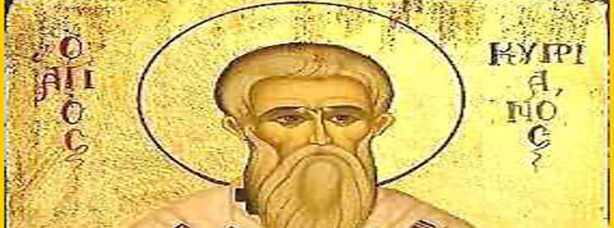
Yesterday, I stumbled across a treatise of St. Cyprian to his congregation that might sound remarkably familiar, if you’ve been following the podcast at all. The letter is written from exile, during the Decian persecution (ad 250). A few years later (ad 258), Cyprian would be executed by Valerian for disloyalty to the emperor - albeit, exhibited by his refusal to participate in Roman religious rites. All of this echoes the life of Boethius in distant ways, but also with Socrates, who was executed in part for introducing false gods into the city.
The following metaphor is an adaptation from South Carolina Senator Stephen Decatur Miller.
Modern liberal democracy is made up of four boxes. Each box represents a fundamental individual liberty, but it also represents a level of escalation in the quest for individual sovereignty in a liberal state.
The first is the “soap box”. This metaphor still has its old meaning to this day. You want to change the system? Well, the freedom of speech gives you the power to persuade your fellow citizens or your leaders.
I want to suggest an idea from an observation that’s been made many times before. Namely, that what the modern center-left now likes to call “classical” and/or “social” Liberalism, is a muddle of two strains of thought in the Enlightenment, that both stand in opposition to Rousseau; but that the latter strain smuggles him back in through the kitchen door.
The division in the Enlightenment between Rousseau and Hobbes is so famous it’s practically a cliché at this point.
From the book “ The Tempting Of America (1991) , By Robert Bork
…It is somewhat unclear whether the modern Court is more politicized than Courts of previous eras. Certainly it makes more political decisions each year than was true in any year in the nineteenth century, but that is largely due to the number of occasions for such decisions presented to it. Before the post-Civil War amendments, particularly the fourteenth amendment, the Court had little opportunity to impose rules on the states.
TV Shows are the dominant popular performing art form of the last 60 years. If you look at the most exemplary shows, one trend stands out: the viewership has gradually become radically homogeneous, and self-centered. This can be seen in the characters portrayed.
Beginning with I Love Lucy and The Dick van Dyke show, right up to Black Mirror and The Good Place, one thing is clear: old people are anathema.
A common line of attack on Ayn Rand, from “professional” academic philosophers, is to go after her for her defense of egoism. This has always seemed disingenuous to me. Or, at best, uncharitable. The argument goes something like this:
Ayn Rand defended selfishness as a virtue Thrasymachus in Plato’s Republic did the same thing Socrates humiliated Thrasymachus in that dialogue Therefore, Ayn Rand’s defense of selfishness is obviously wrong But, anyone trained as a philosopher should be able to recognize the problems with this argument without much effort.
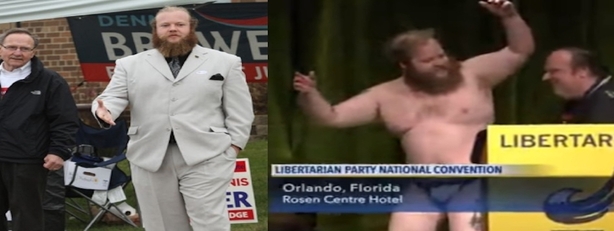
When I was in my late twenties, American Libertarianism was very attractive to me, because of the intellectual tradition. F. A. Hayek, Ludwig Von Mises, David Boaz, and the English heritage of John Locke and Thomas Jefferson, all appealed to me greatly because it seemed to offer both a logical explanation for the state, as well as a moral foundation for its legitimacy.
Some of that intellectual tradition remains with me to this day.
Critics of Rawls claim that his “original position” argument entails a special metaphysical conception of the self. The critics say that this metaphysical conception of the self in the original position thus renders it metaphysically loaded, contra Rawls. In Political Liberalism, Rawls argues against his critics, insisting that the original position was merely a thought experiment meant to aid in the intuitive realization of the principles of justice according to a uniform standard of fairness.
This video is absolutely stunning in its brazenness. If this fellow is what the academy is producing, then it would seem that the whole job of the bioethicist is to invent new excuses that politicians and bureaucrats can use to expand the harm they do, without pricking their own consciences.
Note the magician’s sleight-of-hand trick he’s playing, here. His opening gambit is “making risks tolerable”. So, of course, everyone goes chasing off after “tolerable”.
Most people don’t spend much effort considering fundamental questions like “where does value come from” or “what is real” or “why is there anything at all”. They take the world of sense experience and intuition as a given, and assume objective reality from that. This given-ness extends itself all the way up to social and political life. Contrary to the fantasy we have of ourselves in the west, as rational actors who think for ourselves, the vast majority of opinions are not conclusions drawn from careful reasoning, but accumulations of received opinion modified by cognitive shocks.