There are a number of questions that constantly resurface around philosophy as a discipline. What is it? What is it for? What has it produced? Are its products useful? Does it make progress? And so forth. Today, we are asked to consider the singular question, “What has philosophy done for us?” I’m not going to answer this question, but I will say this. This question presupposes three underlying assumptions:
That philosophy must be for something, That something must be a collective good of some kind, and That philosophy must justify itself in terms of its utility to that end.
The human animal is thought by some to have a “divine spark” in him. What is this? I don’t mean in a metaphysical or definitional sense. I mean, what do humans do, what capacity do they have, what power are they endowed with, that sets them apart from the other animals so much so that they are thought to have this spark? Why on earth would anyone say humans are “touched by the divine”?
David Hume is famous for the “is-ought” problem, which comes from this famous passage, in his “Treatise on Human Nature”:
In every system of morality, which I have hitherto met with, I have always remarked, that the author proceeds for some time in the ordinary way of reasoning, and establishes the being of a God, or makes observations concerning human affairs; when of a sudden I am surprised to find, that instead of the usual copulations of propositions, is, and is not, I meet with no proposition that is not connected with an ought, or an ought not.
I think something is deeply wrong with social media. Mainly, I think this about Twitter, but that may just be because Twitter is the most glaring symptom of whatever this problem is. The following is a short snippet from a podcast discussion between Joe Rogan and Jack Dorsey (dated Feb. 2, 2019). It’s at the point where they’re discussing the nature of the medium, and the various forms that content on Facebook and Twitter can take:
Traditionally, there are two great debates at the core of political philosophy. The first is what justifies political authority, and the second is what should be the form of the institution that assumes that authority. The first debate includes questions of fundamental justice. Issues like what the state owes to its subjects, and what the subjects owe to each other, are central to the debate. The second debate depends somewhat on the answer to the first, in that it seeks to answer how the duties, obligations, rights, and responsibilities of the first debate are to be enacted and enforced.
It seems to me, there are two kinds of state authority. The first, is what I have already talked about yesterday. Philosophical legitimacy - a rational grounding for the moral claim to the privileged use of force. But there is a second kind of state authority, that emerges only in the actual exercise (or restraint of exercise) of power. Psychological legitimacy - the confidence that subjects and citizens have in the state’s exercise of its privilege.
In a recent debate online someone complained to me, after I had pointed to one problem with idea of the Sovereign in Leviathan, that Thomas Hobbes would not have cared about such things as the “fact-value dichotomy”. He went on to assert that the analytics were simply misinterpreting the Enlightenment. I think he is mistaken.
It is true that Hobbes would not have ‘cared’ about the fact-value dichotomy. Indeed, he would have barely been able to make any sense of the idea if you were to pose it to him.
Does Locke offer a convincing account of an individual’s right to property? In his Second Treatise on Government, John Locke constructs a theory of property rights from two explicit arguments for the divine source of the moral claim of ownership, and one implicit argument for the divine source of value in labor. This essay will summarize each of these arguments, offer an assessment of the three arguments in combination, and conclude that Locke’s case is unconvincing in isolation.
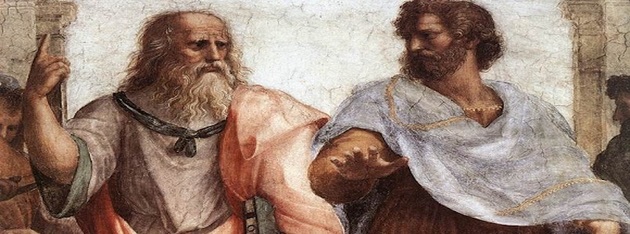
This is for my friends here, who wonder how it is that I can claim that Plato and Aristotle are not as diametrically opposed as the dominant narrative about them claims. The following is an extended snippet from Plato and Aristotle in Agreement? Platonists on Aristotle from Antiochus to Porphyry , by George E. Karamanolis. While the snippet isn’t a definitive refutation of their supposed opposition, it is the beginning of a sustained argument that claims to show just that.
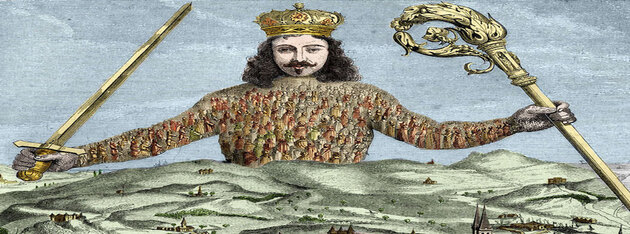
In the Leviathan, Thomas Hobbes posits the creation of a commonwealth by means of a social contract, and as part of that contract, Hobbes theorizes the creation of the office of a sovereign authority, the occupant of which is to act as the representative of the constituted wills of the individual parties of the contract. Hobbes insists that it is not possible for this sovereign authority to commit an injustice against those who have granted him his privileged position.